- Graceland, Ontario: Love Will Teach You Persistence
- Graceland, Ontario: Violence on the Roads: A Lack of Humanity
- Graceland, Ontario: Getting Others to Believe in You (the Elvis Way)
- Graceland, Ontario: It's Quicker with Experience
- Graceland, Ontario: "Image Scrimmage"
Monday, February 18, 2013
They Were There When You Were Born
Wednesday, August 29, 2012
Elvis Presley meets Usain Bolt: Do You Use THIS the Way They Do?

Helloo0O Ladies and Gentlemen!
Welcome back to Graceland Ontario for another week linking the success lessons of the King of Rock ‘n’ Roll back home to YOU. Today, we’ll be returning to the final episode of this Olympic series to explore how YOUR support (and the support of those rooting for you) helps you, and others, perform at a higher level.
At the beginning of the London 2012 Olympics, I recall seeing an advertisement essentially saying “They work harder when you’re there”. The idea was to boost views for the Olympics which would lead to more advertising money and souvenirs and so on, like any sports advertisement. But the advertisers had a point − Olympians do perform better when you’re watching.
Look at Usain Bolt, the Olympic (and World) record holder and gold medalist of the 100m, 200m and 4 x 100m relay athletic events. After the Olympic trials, everyone thought Bolt was going to be beaten by his team-mate, Yohan Blake, who’d runner faster than he had. But, given the real event, the power was pulsing, the crowd was singing and this all gets to Bolt. The extra energy from the crowd is what made him reclaim his gold medal − their support shaves off those last few milliseconds.
Bolt’s a showman and hero to his country − and so was Elvis. Elvis did some good recordings but they rarely matched the passion and energy he showed live. In fact, one of his three Grammys was collected for a live recording of “How Great Thou Art” in 1974. The crowd’s support got to him, too, and pumped him up to that next level, like Usain Bolt, so Elvis could break his records for the quality of his music.
For these great performers, the added crowd, the added support, inspires them to go further than they have before, work harder than they thought possible. Their responsibility and love for you, the listener/watcher, makes them want to do better. Because however scary it is getting on the line for the 100m, they’d rather take it and go as fast as possible than disappoint their fans with a losing performance. I mean, you don’t see Elvis sing “He Gave Me a Mountain” while watching his designer boots. He was there to give a gift to you, the gift of his voice, and he was going to do a good job, too.
So, what’s the lesson in this for you? Well, like Bolt and Elvis, use the energy given to you by your customers’s support to work harder for them and break your own records.
“But I work in an office and don’t see anybody all day?”
Yea… but the people you work for will still be impacted by your work. Do it for them, or better your family. Imagine they’re sitting next to you watching you − you don’t want to disappoint your kids do you? Give it your all so that when you look back at your day, you can smile at the extra swing you gave your work.
“But I work in Wal-Mart and no one cares what cashiers say there anyways…”
Wrong! People do care how Wal-Mart/McDonald's/local petrol station workers react to them. When they’re excited to see you, you can feel that energy. It’s like when you meet someone serving you at the store and you go, “Wow, that’s one awesome gal− I wonder what she’s doing working here…” She’s pushing her limits in doing her best for you, and you like it. On the other hand, the people who lack energy come across as snobs. And they don’t win your business. You know who I mean…
So, push your limits for your customers, family, or any other crowd you serve. After all, you “work harder when [they’re] watching”, when you have their support. And they are watching… not in the creepy, Big Brother way that sounded, but they do care how you react to them. When it’s dead and below level, they don’t want to support you (and that includes paying your salary by giving you business). When you break records, like Bolt or Elvis, they want to help you, you get their business, your boss pats you on the back, the sun shines a bit brighter and you feel fantabulous. I mean, what can you lose?
Elvis’s Lessons:
Be aware of the crowd that’s ‘watching’ you. When you use the energy from their support, as Elvis and Usain Bolt did and do, you perform that bit harder and push to the next level. This is a great technique to win your customers over and earn their business. And when you earn their business they pay you, and isn’t that just the greatest thing!?
P.S. If you want to see Usain Bolt reclaiming his 100m Olympic title, here he is on that fateful day in London.
P.P.S. Remember to leave a comment − love to hear from you!
Thursday, July 12, 2012
He Who Does Not Sympathize, Loses...
Helloo0O Ladies and Gentlemen! Welcome back to Graceland Ontario where, per usual, we will be looking at the success lessons taught by the King of Rock ‘n’ Roll and see how we can use them to revitalize your life! Today, we will be talking about the benefits of sympathy when you give it and the anger it’ll bring you if you don’t.
If you’re a news bug, you may have read about the ongoing tuition riots taking place in Montreal, one of the biggest cities in my country of Canada. Since at least February, there’s been students protesting about the province’s idea to increase tuition 75% for Quebec (that’s a Canadian province, all you out of country-ers) students.
First off, I’m glad I don’t live near Montreal… it seems to have gotten pretty nasty. Secondly, I’m not going to support or condemn the riots… my opinion isn’t the point of this article (though, if you’d like to discuss it with me in the comments section below or by email at alexghilson@gmail.com, I’d be glad to).
What we are going to talk about is an event these riots spurred in a history class while I was present…
The teacher, one of those fellas (he’s a good chap) who likes tying past issues to present ones, asked the class what they thought about the riots. Some had heard, others hadn’t. He showed a news report discussing the event and one of the issues that came up (what condemners of the protest are using for fuel) is Quebec has one of the lowest tuition costs in Canada. In fact, my province (and the kids’s province) of Ontario presently has one of the highest tuition costs.
This was a Grade 12 class. In Canada, that’s your final year of high school, the one before university (if you’re heading there). So, the rise of Quebec’s tuition costs and the riots surrounding them didn’t make that class too understanding. It actually made some mad.
“Why are they complaining when we’ve got it so much worse!?”
“They just need to stop being lazy and get a job!!!”
“It’s just an excuse to wreck havoc… and it makes university students look bad!”
After the riot bashing, the teacher brought a question to the class−
“How would you like it if someone hiked your tuition and said those things to you?”
You can imagine the change of tune.
“But we’re different! We spend more already!”
“I’d get in even more debt.”
Now, as I said before, I’m not supporting or condemn anything. But what I am saying is a lot of people do condemn, often without thinking about the impact of their comments. Does that mean you should agree with the riots? Hell no. But every time you make a public opinion regarding a hot issue, like riots, rights or abortion, you have to expect you’re going to tick somebody off.
“But others condemn? Why shouldn’t I? I don’t care who I tick off!”
Well you should. You are your own advertiser, your best advertiser. Everything you say that’s good gets people wanting you and leading you to success, everything that’s bad will tick people off. And when you tick somebody off, they don’t want to be you customer.
Now, imagine that class had been a company producing university books. Imagine any one of the people in that class had been recorded, legally or not, publicly or not, making one of those condemning comments and those students in Quebec heard. That’s right − that company would be filing for bankruptcy before they could compose an apology.
Turning to our friend the king, Elvis was asked by a reporter in the pre-interview before his Madison Square Garden show in 1972, “You were in the Army and were drafted. What is your opinion of war protesters? And would you today refuse to be drafted?”
What did the king reply? − “Honey, I’d just soon to keep my own personal opinions about that to myself… Cause I’m just an entertainer and I’d rather not say.”
Whether it was because of his manager, Colonel Tom Parker, or simply his own discretion, Elvis took a really great opportunity to make a lot of people mad at him and shut it down. If he’d disagreed and condemned war protesters, he would have kept all his fans from the 50’s who were grown up and conservative at the time but he would have lost all his young fans. If he’d done the opposite, he would have lost his 50’s fan base (his customer base) and would have impressed the young kids.
It’s not that you shouldn’t have an opinion but you’ve got to watch it − the kids in that history class would have offended themselves if they’d later gone to a university with hiking tuition that they wanted to protest.
After all, as one of them said, “They just need to stop being lazy and get a job!!!”
Meanwhile, they’d have alienated everyone (customers included) who took the brunt of their harsh words. Remember: everyone’s a customer, and everyone’s a lead. You need to be comfortable with yourself and your opinions but if it’s not going to do any good spurting it out then don’t − you might save yourself a lot of grief.
Elvis’s Lessons:
It’s not wrong to have opinions and to feel strongly about certain things but you’ve got to watch what you say and, especially, who you condemn. Everyone’s a customer and everyone’s a lead and every time you take the bait to insult somebody, you may well be shooting your success in the foot. If you can hold onto it and scream it into a pillow, it might be an idea − that way you won’t be hurting somebody, and yourself, unintentionally. Remember the high school students: they were going to be university students possibly facing their own tuition hikes. If they stay true to what they said, they’d be insulting themselves and their own hope of change. If it hurt them, it would have hurt somebody else. The only thing to wonder is who would hurt the other more…
P.S. If you're interested in seeing Elvis talking at that pre-Madison Square Garden show press interview, here's a link to a Youtube video of him speaking.
P.P.S. Remember to leave a comment below this post or email me at alexghilson@gmail.com to discuss this post.
Saturday, July 7, 2012
The July 4th Special (Or July 1st for Us Canadians…)

Welcome back to Graceland Ontario where we’ll be discussing the principles that made Elvis Presley so successful and see how we can implement these into your life. Today we’re going to be talking about July 1st, July 4th and patriotism mixed with symbolism (trust me: all these big words will make sense shortly).
For Americans, July 4th (and for Canadians, July 1st) is one of their big holidays. In America, it’s Independence Day, the date where the U.S. as we know it today was born. July 1st was Confederation/ Dominion Day when Canada took control of its own government from Great Britain. For both countries, it’s a day to remember.
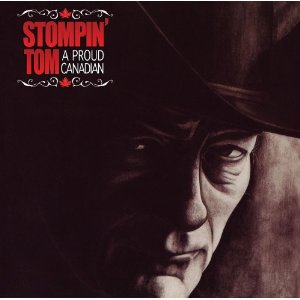
And what happens every Fourth of July or First of July? Everyone relaxes, parties, has a good time (I was camping with friends in Northern Ontario near Sauble Beach this year) − and oftentimes they’re very patriotic about their country. They show symbols like the Star and Stripes (the Maple Leaf in Canada) and listen to ‘American’ (or ‘Canadian’) music. You know, those people who are synonymous with your country. Canada has a couple − Gordon Lightfoot, Stompin’ Tom being big but also Celine Dion, Shania Twain, these days, Justin Bieber − even Michael Buble! But the U.S… you guys have Elvis.
But how does this status affect his success?
By being linked to the U.S., as long as the U.S. is doing well, Elvis is doing well − in image at the least. He’s shown all over the place and played whenever the Fourth of July comes along. Like Bing Crosby with Christmas, he gains a new following every time there’s need to put on “American Trilogy” again. And because of his national identity, people who love their country because of military service or government service or whatever find a hero and friend in his music. Someone who represents them when 90% of modern music’s going on about how best to party and take drugs while enjoying life with a prostitute. Elvis believed in something big, something wonderful − his country. Sure, they’ve done wrong but his unshakeable believe gave him something to live for, a purpose. And so few people have that. It made him special.
P.S. If you’re interested in seeing Elvis celebrating his country with “American Trilogy” at the Aloha from Hawaii! Rehearsal Concert, here’s a Youtube clip of him showing his country at its best.
P.P.S. Remember to leave a comment below or email me at alexghilson@gmail.com to continue the conversation. I'd be glad to hear what you have to say.